
Quick answer
Home care after a hospital stay helps seniors recover safely and comfortably at home. A trained companion or homemaking aide handles daily tasks, provides reminders, and keeps your loved one engaged so they do not feel alone. Starting support quickly after discharge lowers the risk of complications and reduces the chance of returning to the hospital. This guide walks your family through what to expect and how to plan.
Bringing a parent or loved one home from the hospital can feel like a relief and a worry at the same time. You are glad they are out, but you also know the days right after discharge are critical. Home care after a hospital stay fills the gap between clinical treatment and everyday life, and arranging it is one of the most important steps a family can take. We understand that families in Mount Dora, FL often face this transition with very little notice, and the pressure to get everything right is real.
When a senior has the right home care after a hospital stay, they sleep better, follow their routines more consistently, and heal in familiar surroundings. This guide explains how that support works, what services help most, and how to get started quickly so your loved one comes home to a situation that actually supports recovery.
Why the Days Right After Discharge Matter Most for Home Care After a Hospital Stay
Hospitals typically discharge patients as soon as they are medically stable, not fully recovered. That means your loved one may still be tired, sore, or uncertain on their feet when they arrive home. The first two weeks after leaving the hospital carry the highest risk of something going wrong, and that risk drops significantly when consistent daily support is in place.
Seniors living alone are especially vulnerable. A missed meal, a fall on the way to the bathroom, or simply sitting in silence for too long can all set back a recovery. Having someone present, even for a few hours a day, makes an enormous practical and emotional difference.
- Fatigue and weakness are common even when vital signs look normal
- Medication schedules can be confusing right after discharge
- Dehydration and poor nutrition slow healing at home
- Isolation raises the risk of depression and hospital readmission
- A familiar, calm environment speeds recovery when paired with steady support
What Home Care After a Hospital Stay Typically Includes
Non-medical home care focuses on the daily tasks that become hard during recovery. That includes preparing meals, light tidying, laundry, running errands, and helping your loved one keep a comfortable and organized home. Our Homemaking Services cover exactly these needs so your family can focus on being present rather than managing logistics.
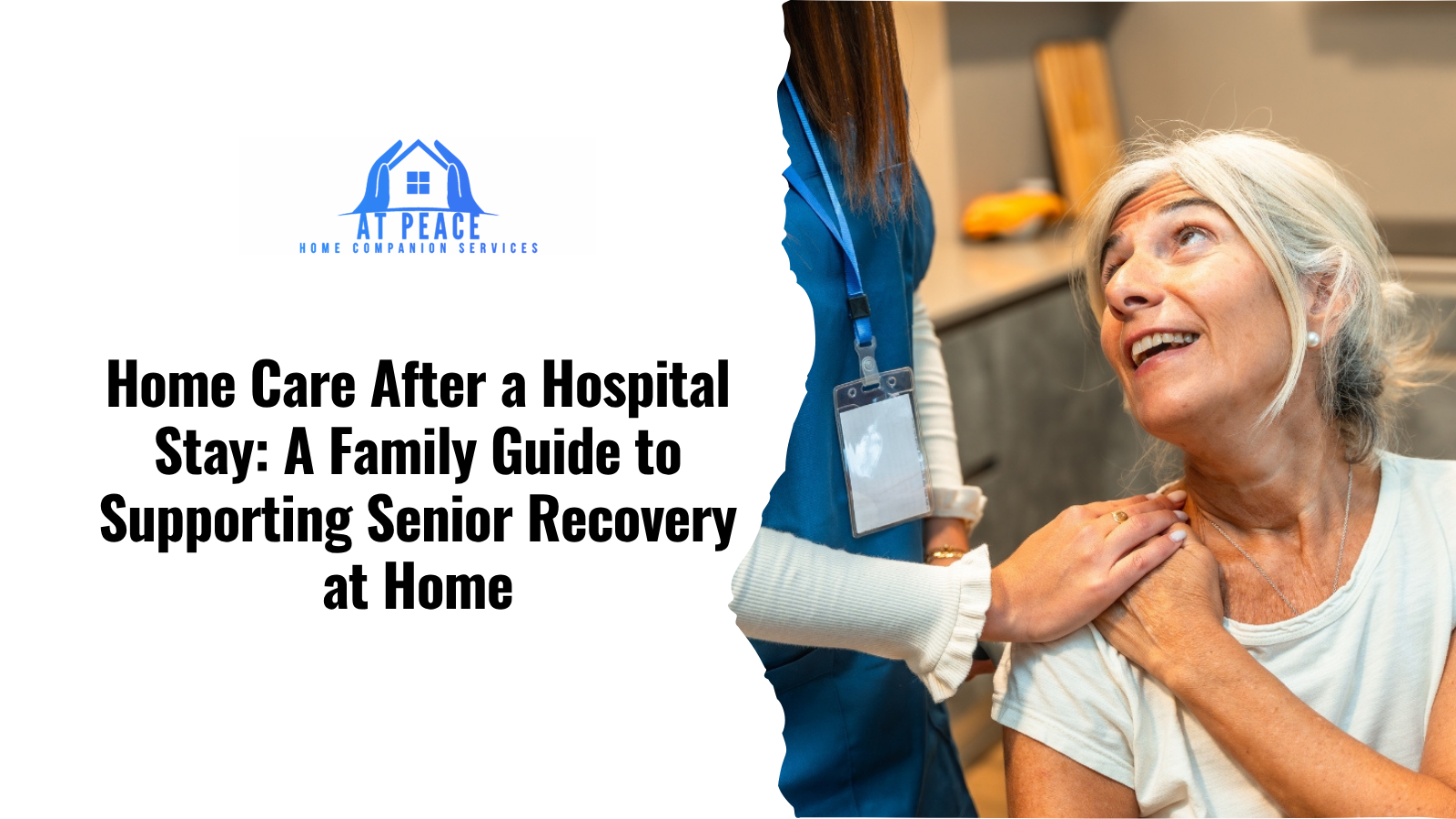
Companion care adds a social and emotional layer. A companion sits with your loved one, engages them in conversation, accompanies them on gentle walks, and provides the kind of calm, steady presence that prevents feelings of abandonment after a major health event. Both types of support can be scheduled around your loved one’s needs and adjusted as their strength returns.
- Meal preparation and light grocery coordination
- Laundry, dishes, and tidying living areas
- Friendly conversation and social engagement
- Reminders for appointments and daily routines
- Accompaniment to follow-up visits or short outings
Personal Daily Assistance: Bridging the Gap Between Hospital and Independence
Some seniors need more structured help with daily routines after a hospital stay. Personal daily assistance covers non-medical support like grooming reminders, help with mobility around the home, and structuring morning and evening routines so your loved one does not feel overwhelmed. This type of care meets people where they are without overstepping into medical territory.
Our Personal Daily Assistance services in Mount Dora, FL are designed to give seniors just enough support to stay safe and confident. As recovery progresses, the level of help can be scaled back naturally. The goal is always to support independence, not replace it.
How Families Can Prepare the Home Before Their Loved One Arrives
A little preparation before discharge day makes a big difference. Walk through the home and remove loose rugs or cords that could cause a trip. Make sure the bedroom and bathroom are easy to navigate. Stock the kitchen with simple, nourishing foods. Set up a comfortable chair in the main living area so your loved one can rest without climbing stairs repeatedly. If your family is in the Mount Dora, FL area, you can call us at (352) 356-8758 to talk through what a care plan might look like before your loved one even leaves the hospital.
Ask the discharge nurse for a written summary of any restrictions, follow-up appointments, and warning signs to watch for. Keep that summary somewhere visible. Share it with anyone who will be helping with care, including the home care companion. Clear communication between everyone involved prevents small problems from becoming serious ones.
- Clear walkways and secure loose rugs before arrival
- Place frequently used items within easy reach
- Write down all medications and dosing times in plain language
- Post the discharge summary and follow-up appointment dates visibly
- Have a quiet, comfortable sleeping area ready with extra pillows if needed
Choosing the Right Home Care After a Hospital Stay in Mount Dora, FL
Not every home care arrangement is the same. When choosing a provider, ask about their experience with post-hospital recovery, how quickly they can begin services, and how they handle schedule changes if your loved one’s needs shift. A good provider listens to your family’s specific concerns and builds a care plan around the actual person, not a generic checklist.
AT PEACE HOME COMPANION SERVICES LLC is based right here in Mount Dora, FL, at 1548 Truscott Court. We serve families across Lake County and surrounding areas. When you reach out to us at (352) 356-8758, you will talk to someone who genuinely wants to help your loved one come home safely. This is general information intended to guide your planning. For medical decisions or insurance coverage questions, please confirm details with your loved one’s care team or insurance plan.
Frequently Asked Questions
How soon after discharge should home care after a hospital stay begin?
Ideally, home care should begin on the same day your loved one arrives home or within the first 24 hours. The earlier consistent support is in place, the lower the risk of falls, missed meals, or other setbacks during the most vulnerable recovery window.
Does home care after a hospital stay have to be medical?
No. Non-medical home care covers daily tasks like meals, light homemaking, companionship, and routine reminders. Medical care is handled by nurses or therapists ordered by the doctor. Both types of support can work together, but they are separate services.
What if my loved one only needs help for a few weeks?
That is completely normal. Many families start with daily support and taper down as their loved one regains strength and confidence. A good home care provider will adjust the schedule to match your loved one’s progress.
Can a companion help with transportation to follow-up appointments?
Yes. Companions can accompany seniors to follow-up visits and short outings. This is especially helpful when family members cannot always take time off work to drive to every appointment.
How do I know if the level of care is still appropriate as recovery continues?
Check in regularly with your loved one and with the care team. A trustworthy home care provider will flag any changes they notice and help you decide whether to reduce, maintain, or adjust services as recovery progresses.